Meme coin trading versus buying established coins and why speed trading wins only for a few
Want articles like this for your own video to promote it on YouTube and Google? Order them through the Telegram bot @sat_sit_bot. It writes articles around your video, embeds the video and publishes them on popular niche websites (no ads). Free trial — 50 articles.
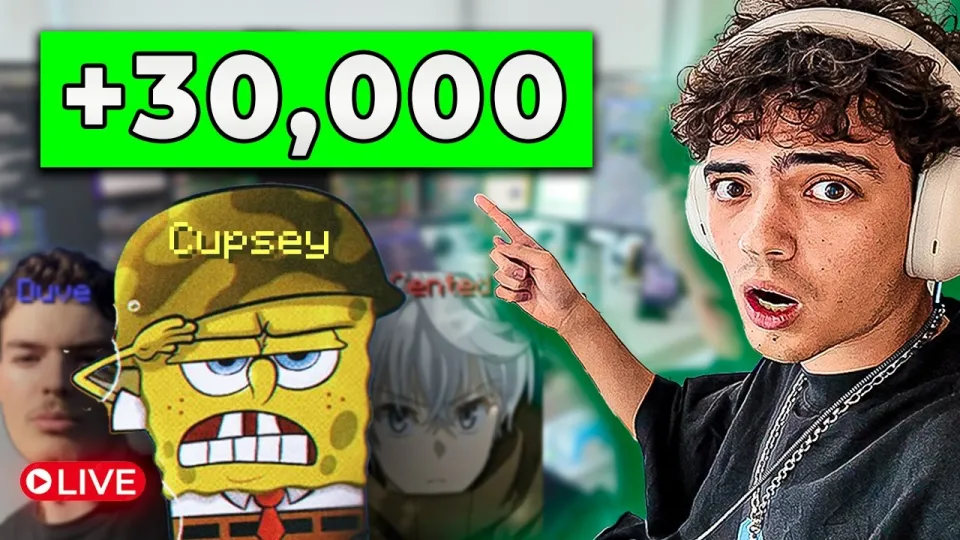
A meme coin is a token with no cash flow, no product roadmap that matters to price and no valuation anchor — its price is set purely by attention, liquidity and the speed at which holders rotate in and out. That makes meme coin trading a different discipline from investing in established crypto assets: the edge is not in analysis of fundamentals but in execution, wallet tracking and risk control. The Ethan Prosper session with trader Cupsey, published in August 2026, shows what that discipline looks like in practice, with trades on Solana pairs executed through the Padre terminal.
What a meme coin actually is and why it trades differently
A meme coin is a speculative token launched cheaply, usually on Solana or similar low-fee chains, where the entire thesis is that other buyers will arrive after you. Because launch costs are near zero, supply is effectively unlimited and new pairs appear by the thousand every day, price discovery happens in minutes rather than quarters. Established assets like Bitcoin or Ethereum have halvings, ETF flows and on-chain revenue to argue about; a meme coin has a ticker, a logo, a Telegram or X account and a liquidity pool.
The practical consequence is that a meme coin has three states: launch, attention spike and decay. Traders who make money consistently are not buying and hoping — they are positioning before the attention spike and selling into it. Anyone treating a meme coin like a long-term holding is playing a game with different rules from the people on the other side of the trade.
Inside a top trader's session: trades, sizes and numbers
The Ethan Prosper video with Cupsey is a live record of how a professional meme coin desk operates, and the numbers are concrete. The opening trades on Lobo and a token called 1% produced roughly 200 SOL, and the session continued through Cheese Coin, an AI Cook token, a Grok-themed bot trade worth about $15,000, a coin tied to a Magic Internet Money dev and a Mosaic AI cook that returned around 80 SOL.
What matters is not the headline profit but the structure behind it. Each position was small relative to the wallet, each entry was tied to a specific catalyst — a dev's history, a narrative like AI or Grok, a holder pattern — and each exit came fast. The viewer comments under the video split exactly along this line: some call the result insane, others point out that these are the traders who run multiple wallets and take liquidity from slower buyers. Both observations are correct at the same time.
The speed trading playbook, step by step
Speed trading new meme coin pairs is the most difficult style in crypto, and it is worth spelling out as a sequence because the order matters more than any single tool.
- Build a watchlist of wallets. Profitable traders track dev wallets and known profitable addresses rather than scanning charts blindly. Cupsey's wallet is public and linked from the video description, which is exactly how this research starts.
- Filter the launch. Check who deployed the contract, whether the dev has a history of rugs, how much supply the top holders control and whether liquidity is locked or burned.
- Size the position so a total loss is survivable. In the session above, individual trades were a fraction of the bankroll, which is why a single bad call did not end the day.
- Enter on the catalyst, not on the chart. The trigger is a new holder, a dev buy, a narrative tag like AI or a KOL mention — not a technical pattern on a five-minute candle.
- Exit in tranches. Sell part into the first spike, move the rest to break-even and let a small remainder run only if volume keeps expanding.
- Log every trade. Without a record of entry reason, size and exit, there is no way to tell skill from a lucky week.
The tools in this workflow are terminals such as Padre, Axiom and BullX, which bundle charting, wallet tracking and fast execution on Solana. None of them supply an edge on their own; they only remove friction from a decision you have already made.
Where meme coin trading goes wrong for beginners
The most common failure in meme coin trading is copying a wallet without copying the risk model. When a top trader buys a new pair, followers see the entry but not the plan: not the size relative to the bankroll, not the price at which the position gets cut, not the number of other wallets quietly working the same coin. By the time a copy trade fills, the original buyer may already be selling into that demand.
A second failure is time. The traders in this style run sessions of ten hours or more, monitoring launches continuously; a person with a job cannot replicate that attention, and pretending otherwise turns a skill game into a donation. A third is narrative blindness: AI tokens, Grok-themed coins and dev coins all trade on the same mechanics, and buying a ticker because the story sounds good, without checking holder concentration, is how most losses happen.
A realistic alternative for people who do not want to speed trade
Meme coin trading does not have to mean sniping new pairs, and the most useful takeaway from watching professionals is a negative one: you do not need this style to make money in crypto. Larger, more liquid meme coins and established assets allow slower entries, wider stops and position sizes that do not require constant screen time. The trade-off is lower upside per trade and a longer holding period, which suits most people far better than a ten-hour launch hunt.
If you do want exposure to the fast lane, treat it as a small, capped allocation — money you can lose entirely without changing your finances — and only after you have watched a few hundred launches and written down what happened. The distinction between a trader and a gambler in this market is almost entirely record-keeping and sizing, not reaction speed.
Common questions from viewers of live meme coin sessions
Viewers of live trading streams raise the same doubts every time, and they are worth addressing directly because they decide whether someone should try this at all. The recurring themes are whether the profits are real, whether the game is rigged against retail, what "faucets" and multi-wallet setups mean, and how to pick a coin to buy.
On whether the numbers are real: a public wallet address can be checked on a block explorer, which is why serious traders publish theirs. On multi-wallet activity: yes, professionals run several addresses, and that is a structural feature of the market rather than a secret — it is also a reason to avoid coins where top holders look like one entity. On choosing a coin: the honest answer is that selection comes from wallet history, holder distribution and narrative timing, not from a screener ranking. On the faucet question: the term usually refers to small, repeated sources of new liquidity or launch flow that a trader monitors, not free money.
Useful links
- Padre terminal registration — the trading terminal used in the session
- https://ethanprosper.com — all links from the channel
- https://x.com/cupseyy — Cupsey's X account
- https://discord.gg/solmafia — free SOLMAFIA Discord
- https://www.joinpastel.com/r/ref=ETHAN — Pastel paid community
Bottom line on meme coin trading
Meme coin trading rewards speed, sizing discipline and a written exit plan, and the live session from Ethan Prosper with Cupsey shows all three at work across trades that produced roughly 200 SOL on the opening pairs, about $15,000 on a Grok-themed bot coin and around 80 SOL on a Mosaic AI cook. It also shows the cost of the style: long sessions, constant monitoring and a market where most participants lose. Treat the video as a look inside a professional desk rather than a template to copy, keep any fast-trading allocation small, and remember that the same discipline applied to slower, more liquid assets is a legitimate path for anyone who cannot watch launches all day. If you want to follow the workflow, start with registration on the Padre terminal and paper-trade the process before risking real capital.
Key takeaways
- A meme coin is a token whose price rests on community attention and liquidity, not on cash flow or product revenue.
- In the Ethan Prosper video with Cupsey, the first trades on Lobo and a 1% token added roughly 200 SOL before the session moved on.
- The session also covered Cheese Coin, an AI Cook token, a Grok-themed bot trade worth about $15K, a Magic Internet Money dev coin and a Mosaic AI cook worth around 80 SOL.
- Speed traders run 10+ hour sessions on new Solana pairs through terminals such as Padre, Axiom and BullX, watching wallets, dev behavior and holder flow.
- Copy trading a top wallet does not copy the exit plan, the position sizing or the risk limits that made the wallet profitable.
Source: I Traded With The World’s #1 Memecoin Trader · Markdown version
Questions & answers
Is meme coin trading profitable for beginners?
Rarely at first. The profitable traders in this style run long sessions, track wallets and size positions so a total loss does not matter. Beginners typically see the entries of top traders but not their exits, sizing or risk limits, which is why most first attempts end in losses.
How much money do you need to start trading meme coins?
There is no fixed minimum because Solana fees are tiny, but the practical requirement is that the entire amount is money you can lose without consequence. Professionals keep each individual position a small fraction of their bankroll, so a starting balance should be large enough to split across many small trades rather than one all-in bet.
Can you copy trade a top meme coin trader?
You can follow a public wallet, and block explorers make that easy, but copying an entry does not copy the exit. By the time a copy trade fills, the original buyer may already be selling into that demand, and the copy trader has no visibility into the position size or the plan behind it.
What is the difference between meme coin trading and investing in Bitcoin?
Bitcoin has supply schedules, institutional flows and years of price history to analyse. A meme coin has attention, liquidity and a launch date, so its price is driven by rotation speed rather than fundamentals. The skills, holding periods and risk limits for the two are completely different.