Crypto investors facing a market crash can use the drawdown to build positions instead of panic selling
Want articles like this for your own video to promote it on YouTube and Google? Order them through the Telegram bot @sat_sit_bot. It writes articles around your video, embeds the video and publishes them on popular niche websites (no ads). Free trial — 50 articles.
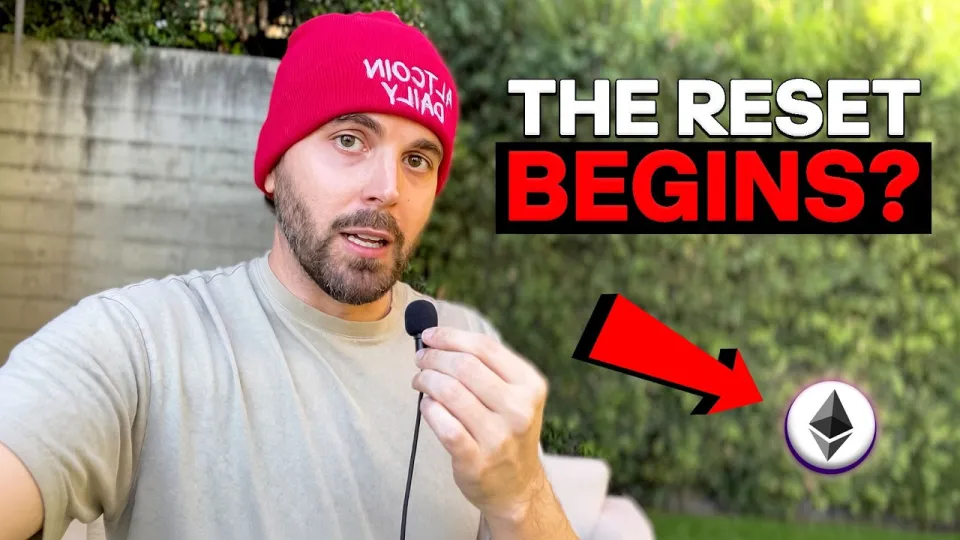
A crypto market crash does not require a special strategy so much as a pre-written one: investors who hold assets bought for multi-year theses should check whether those theses broke, keep position sizes inside their risk limits, and use staged buying rather than a single all-in bet. Altcoin Daily's breakdown of the current selloff makes the same point from the other direction — the danger for most holders is behavior under stress, not the red candles themselves. The channel's only official link in the video points to its merch store and community shop.
What the crypto crash actually looks like in the numbers
The scale of a drawdown matters less than the return path around it, and the figures circulating alongside the video make that concrete. On October 24, 2026, with Bitcoin at $80,707, the five-year compound annual growth rate came out to 5.78% — a modest figure that quietly reframes the "crash" narrative. A 5.78% CAGR is roughly what a conservative portfolio might target, which means five years of holding the largest crypto asset delivered equity-like returns with far more volatility along the way.
That does not make the drop painless. It does mean the question "is crypto dead?" and the question "did the last five years pay?" have different answers. Altcoin Daily's framing is that the market is repricing risk, and repricing is what markets do between expansions.
Why long-term holders treat a crash as a buying window
The most common response among experienced holders is not exit but accumulation on a schedule. The logic is mechanical: if you believed an asset was worth owning at a higher price and nothing about the asset changed, a lower price is a better entry, provided your position sizing still fits your plan. Several viewers described exactly this — one said a crash simply means more time to average down, another said to hold and buy more when the big dip arrives, and a third said they had not logged in to check prices in two weeks because the horizon is long term.
There are three practical rules that make this work rather than hurt:
- Decide the total amount you are willing to allocate before the drop, not during it.
- Split that amount into fixed tranches (for example, weekly or on defined percentage drawdowns) so emotion does not set the pace.
- Keep a cash reserve for a further leg down; a crash that feels final rarely is.
Averaging down only helps if the asset survives. That is the distinction between conviction and stubbornness.
The doubts investors are voicing right now
Skepticism in the current market clusters around a few recurring themes, and each deserves a straight answer. One is the claim that the move is not a real crash but ordinary manipulation — a view that offers comfort but no actionable information, because positioning for manipulation and positioning for a crash look identical. Another is the observation that Bitcoin has printed higher highs across cycles while Ethereum has not matched that pattern, which raises a fair question about relative strength within a portfolio.
A third theme is regulatory: some holders doubt that "fewer laws" will materialize and argue that uncertainty, not rules, is what markets fear. A fourth is simple fatigue — viewers asking whether the channel itself will still be around next cycle. None of these doubts changes the arithmetic of a long-term plan, but they do argue for writing down, in advance, what would actually make you sell.
What a five-year CAGR of 5.78% tells you about expectations
A 5.78% five-year return on Bitcoin is a useful calibration tool for anyone still assuming every cycle delivers triple digits. If your plan requires 50% annualized returns to reach its goal, that plan is fragile and a crash will expose it. If your plan assumes high-single-digit to low-double-digit compounding with deep interim drawdowns, the current price is unremarkable.
The practical step is to compute your own CAGR from your actual entry prices rather than from the chart. Most holders discover their realized return is better than the headline number because they bought through earlier lows — or worse, because they bought near a top. Either way, the number you calculate is the only one that should shape your next decision.
How to position without predicting the bottom
Nobody in the video, and nobody in the comments, claims to know where the bottom is, and that is the honest starting point. Instead of forecasting, define conditions: a maximum allocation to any single asset, a rebalancing rule that trims what has run and adds to what has lagged, and a written note on what fundamental change would invalidate each position. Altcoin Daily's discussion leans on the same discipline — the market rewards prepared holders and punishes reactive ones.
If you are not buying right now, that is a legitimate choice too. One viewer said they would rather improve their living situation than shop for assets, and saving cash for near-term needs is a position, not a failure. Liquidity you might need within a year does not belong in a volatile asset during a drawdown.
Links from the video
- Altcoin Daily shop and merch: https://altcoindailyshop.myshopify.com
The takeaway for crypto investors in this drawdown
A market crash is a stress test of the plan, not of the price chart. The numbers in this cycle — Bitcoin near $80,707 on October 24, 2026, and a five-year CAGR of about 5.78% — argue for realistic return expectations and staged accumulation rather than all-in bets. Holders who wrote down their rules before the drop are the ones calmly averaging down; everyone else is reacting to headlines. Altcoin Daily, as the author of this video breakdown, frames the selloff as a conviction test, and that framing holds up. If you want to support the channel while you wait out the volatility, visit the Altcoin Daily shop.
Key takeaways
- Bitcoin traded near $80,707 on October 24, 2026, per a widely shared figure in the discussion around the Altcoin Daily video.
- Bitcoin's five-year compound annual growth rate at that price works out to about 5.78%.
- Altcoin Daily frames the selloff as a test of conviction rather than the end of the cycle.
- Long-term holders in the audience describe averaging down and avoiding daily price checks as their response.
- The video's only official link is the Altcoin Daily merch store at altcoindailyshop.myshopify.com.
Source: Crypto Investors Are In Serious Trouble (market crash) · Markdown version
Questions & answers
Is this a real crypto crash or just market manipulation?
Both descriptions lead to the same action, so the distinction is mostly emotional. A sharp drawdown is a real loss of market value whether it is driven by leverage unwinding, macro risk-off or large players repositioning. What matters for your portfolio is position size and whether your original thesis still holds, not the label attached to the move.
Should I keep buying altcoins during a crash?
Only within a pre-set allocation and only in tranches. Decide the total amount before the drop, split it into fixed buys, and keep a cash reserve in case the decline continues. Averaging down works when the asset survives and your horizon is long; it fails when you commit everything at once or use borrowed money.
Why has Bitcoin made higher highs each cycle while Ethereum has not matched it?
That is a relative-strength question rather than a verdict on either asset. Bitcoin has benefited from being the default institutional and liquidity entry point, while Ethereum's returns have depended more on activity in its own ecosystem. The practical response is to size positions by conviction and rebalance rather than to assume past relative performance repeats.
Does a 5.78% five-year CAGR mean crypto is no longer worth holding?
It means the last five years delivered equity-like compounding with much higher volatility, which is a reason to calibrate expectations, not necessarily to exit. If your plan needs very high annualized returns to work, it is fragile and should be revised. If it assumes modest compounding with deep drawdowns along the way, the current price is within normal range.